Tall Pine Tree Removal - Willow Spring, NC
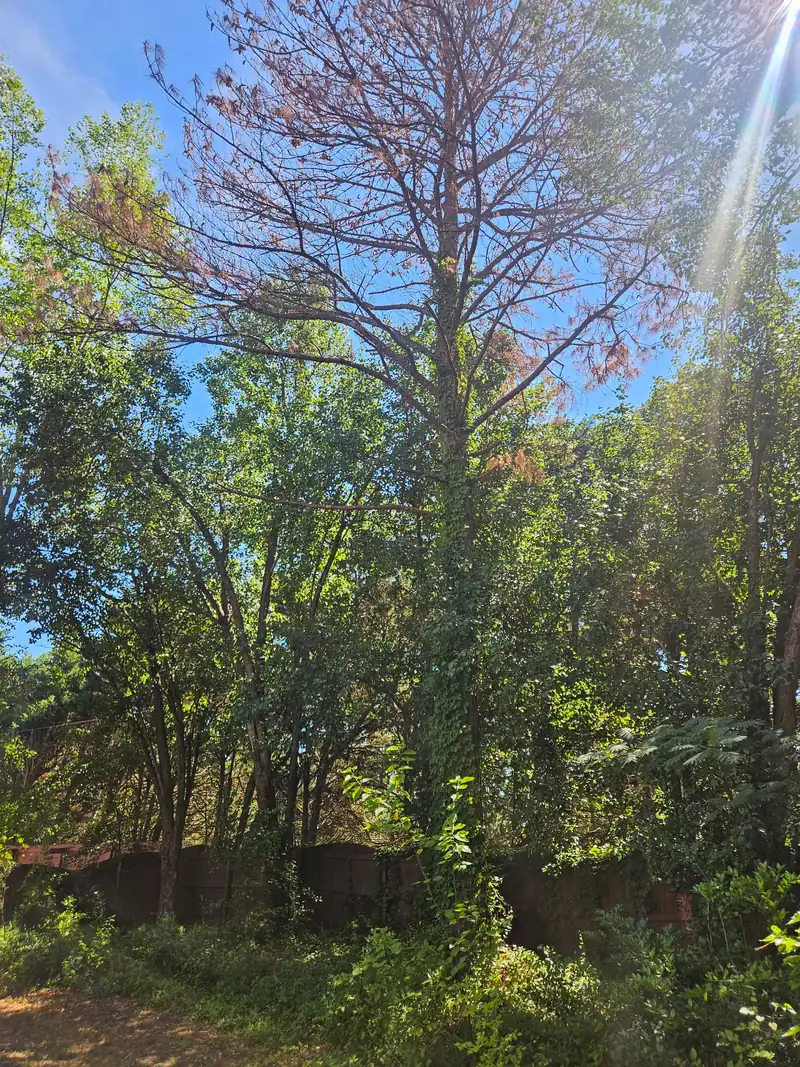
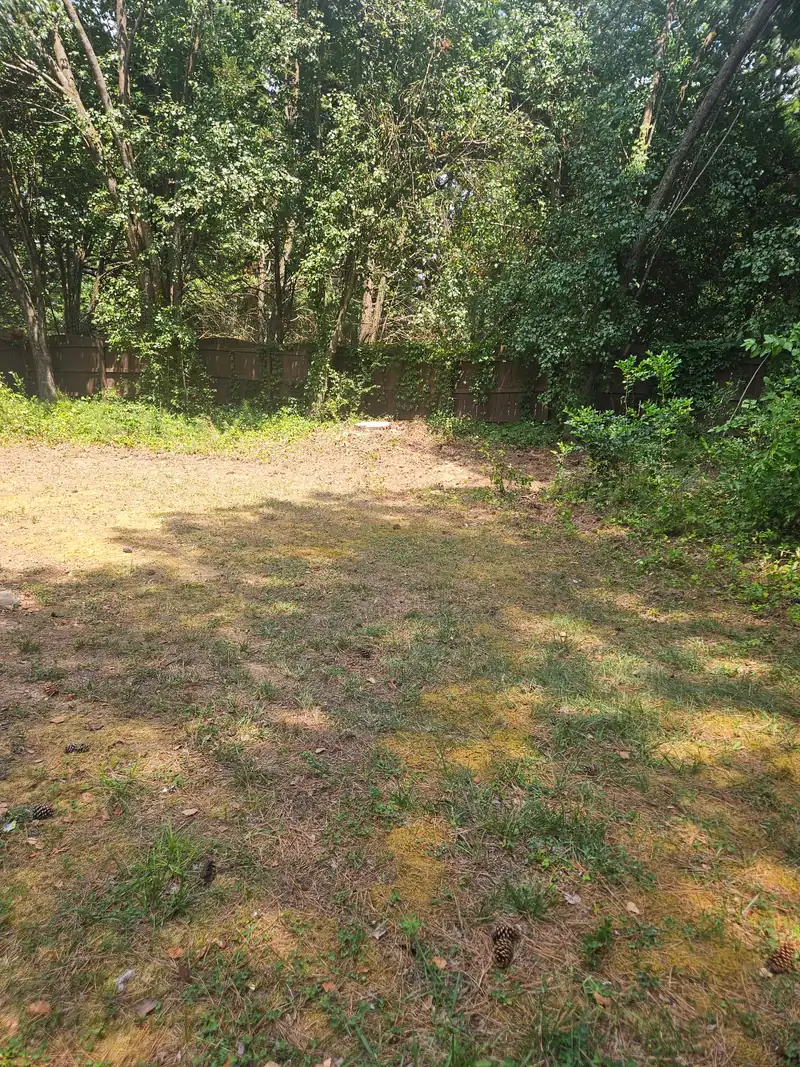
A tall pine with a dead, brown crown was removed from a fenced backyard in Willow Spring, NC.
Residential and commercial tree removal
Dead, damaged, leaning or simply in the wrong place, some trees need to come down. We remove them safely, protect the property around them and leave the site clean.
Removing a tree is rarely the first choice, and it should not be. Healthy, well-placed trees add shade, privacy and value to a property. But when a tree is dead, structurally compromised or putting a home, driveway or business at risk, removal is often the safest and most practical decision. e Tree Service handles tree removal for homeowners and commercial property owners throughout the Triangle and surrounding areas, from small ornamental trees to large hardwoods and pines standing a few feet from a roof.
Dead trees are the most obvious case. Once a tree dies, its wood begins to dry out and decay, and limbs can drop without warning. Pines in particular can go from green to brown quickly, and a dead pine near a house becomes more hazardous with each passing month.
Dying and declining trees are harder to judge. Thinning canopies, large dead sections, peeling bark, fungal growth at the base or cavities in the trunk can all point to a tree that will not recover. Some of these trees can be managed for a while with trimming. Others have reached the point where the risk outweighs the benefit of keeping them. If you are not sure, our tree condition assessment can help you decide.
Storm-damaged trees may have split trunks, torn-out tops or major limbs hanging in the canopy. Even when a damaged tree is still standing, it can be unstable. When a storm-damaged tree threatens a structure or blocks access, our 24/7 emergency tree service can respond right away.
Leaning trees are not always dangerous. Many trees grow with a natural lean toward the light. A lean that appears suddenly, gets worse over time or comes with cracked soil and lifted roots on the opposite side is a different story and deserves a close look.
Trees too close to homes and buildings can damage roofs, gutters and siding, and their roots can crowd foundations, walks and patios. A tree that was a sapling when the house was built may now tower over it.
Trees interfering with driveways, construction and landscaping are another common reason for removal. A tree may be in the way of a new garage, addition, pool or fence line, or its roots may be lifting a driveway. For larger areas that need to be opened up, see our land and lot clearing service.
Hazardous limbs and difficult-access trees round out the list. Trees wedged between houses, leaning over fences into a neighbor's yard, growing behind a pool or reachable only through a narrow gate require more planning, but they can almost always be removed safely.
Every removal starts with a visit to the property. We look at the tree's height, trunk diameter and overall condition, including signs of decay or weakness that affect how it can be climbed or cut. Just as important is what surrounds it: the house, garage, fences, sheds, landscaping, driveways, septic systems, irrigation and any utility lines in the area. We also check the route for equipment and debris, because a tree in an open front yard and a tree behind a fenced backyard are very different jobs.
With the site in mind, we decide how the tree should come down. In open space with enough room, a tree may be felled in one piece in a controlled direction. Near structures, the tree is usually taken down in sections, working from the top down. Limbs and trunk pieces are cut and lowered on ropes, a technique called rigging, so nothing drops onto the roof, deck or garden below.
Trees near overhead utility lines need special care. If a tree is in contact with or close to power lines, the utility may need to be involved before work begins. We will tell you if that is the case.
On removal day, we set up the work area, protect what needs protecting and take the tree down according to the plan. Brush is chipped or hauled, wood is cut and removed or left in rounds if you want firewood, and the work area is raked and blown off. We agree on the details of cleanup during the estimate so there are no surprises when the crew packs up.
Tree removal leaves a stump unless you choose to have it ground. Many customers add stump grinding so the area can be mowed, seeded, sodded or replanted. Others prefer to leave the stump for now. Either way, let us know during the estimate.
Safety and protecting your property are part of the plan. Our crews work in helmets and high-visibility gear, keep a clear work zone and are fully insured. We look for the right approach for your specific site, whether that means sectional removal, careful equipment placement to protect a lawn, or extra time to lower wood around a delicate landscape.
Most of our removals are on residential properties, where the tree is often close to where a family lives, parks and plays. We work with homeowners on timing and access, keep the work area organized and treat the yard with care. Learn more about our residential tree service.
Commercial removals bring different priorities: customer and tenant safety, parking lot access, building entrances, signage and business hours. We plan commercial jobs so the property keeps functioning while the work gets done. See our commercial tree service page for more.
When a tree has fallen on a home, vehicle or fence, or a damaged tree is threatening to fall, waiting is not an option. Our emergency line is available 24/7 at (919) 290-3020. In emergencies we focus first on removing the immediate hazard and making the property safe, then return for full storm cleanup if needed.
No two removals are priced the same, because no two trees and properties are the same. The height and trunk diameter of the tree determine how much wood there is to cut, lower and haul. The tree's condition matters too; dead or decayed trees can be less predictable and may require different techniques.
Access and location often have the biggest effect on price. A tree that equipment can drive right up to is simpler than one behind a house, down a slope or through a narrow gate. Proximity to structures is closely related: a tree over a roof usually needs to come down in small, rigged sections, which takes more time and people than felling in an open yard. The equipment required, the scope of cleanup and whether you want stump grinding included round out the estimate.
The best way to get an accurate number is a free on-site estimate. We will walk the property, explain what the job involves and give you a clear price before any work starts.
Removal work looks different from one town to the next. In Apex and Holly Springs, many calls involve pines and hardwoods left standing when newer lots were cleared, trees that often decline a few years after construction. In Cary, it is more often a mature hardwood towering over a finished, landscaped yard. Raleigh removals frequently mean large oaks in small, fenced backyards with overhead lines and on-street parking to plan around, while in Durham we work on everything from tight in-town lots to wooded suburban back lines and commercial sites.
Farther west, Chapel Hill brings sloped, heavily wooded lots where rigging and careful wood removal matter most, and around Pittsboro many removals are edge trees on larger wooded homesites with long driveways and septic fields to work around. We also remove trees throughout the other communities listed on our service areas page.
In Wake Forest, removals range from mature oaks over homes in the older neighborhoods to tall pines along the wooded edges of newer subdivisions. In Morrisville, compact lots, townhome communities and commercial sites mean most trees come down in sections with careful rigging. Around Youngsville, Knightdale and Clayton, tall pines on larger or newly built lots are frequent removals, especially after they start to decline or lean. Each location page explains the local factors that affect access and cost; every job is still priced after an on-site look.
A tall pine with a dead, brown crown was removed from a fenced backyard in Willow Spring, NC.
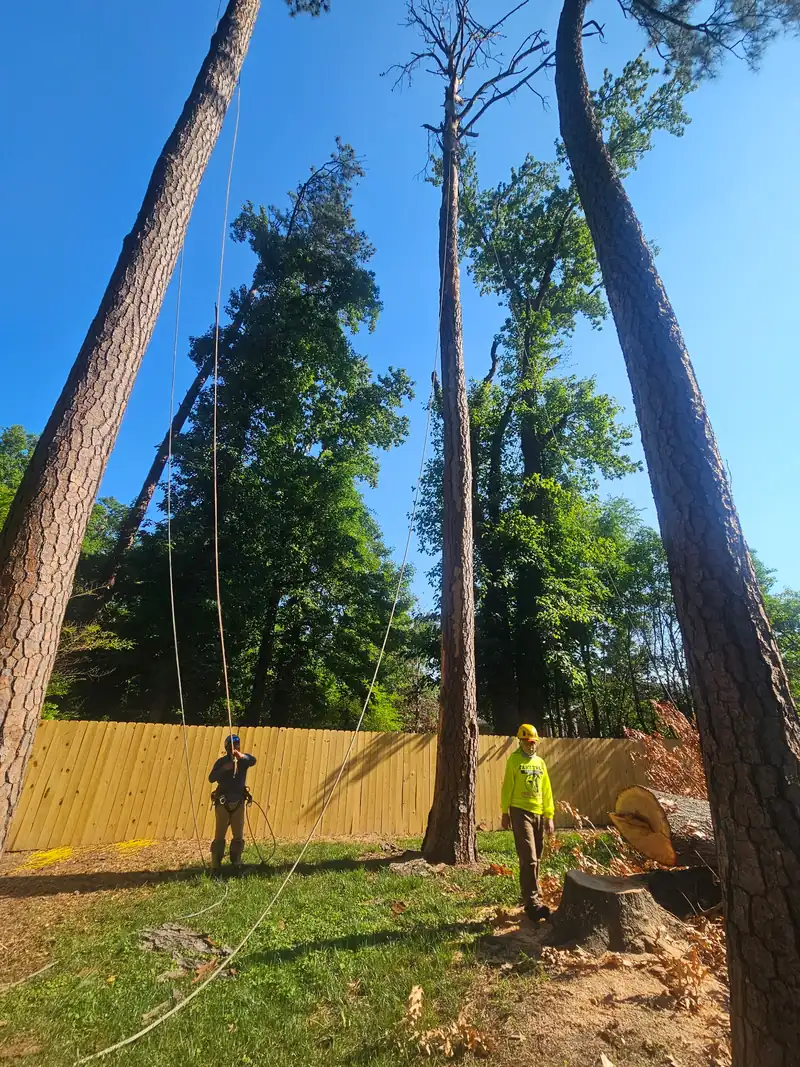
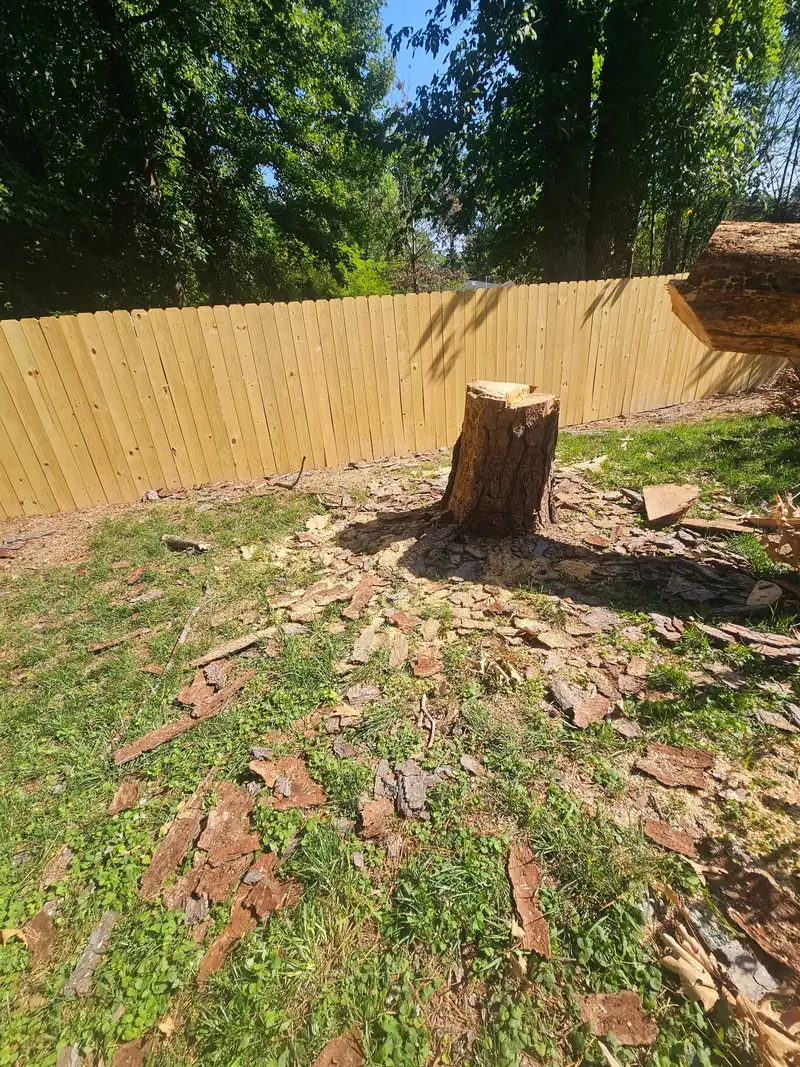
A large pine was removed from a fenced backyard in Durham, NC, with the crew working in helmets and high-visibility gear.
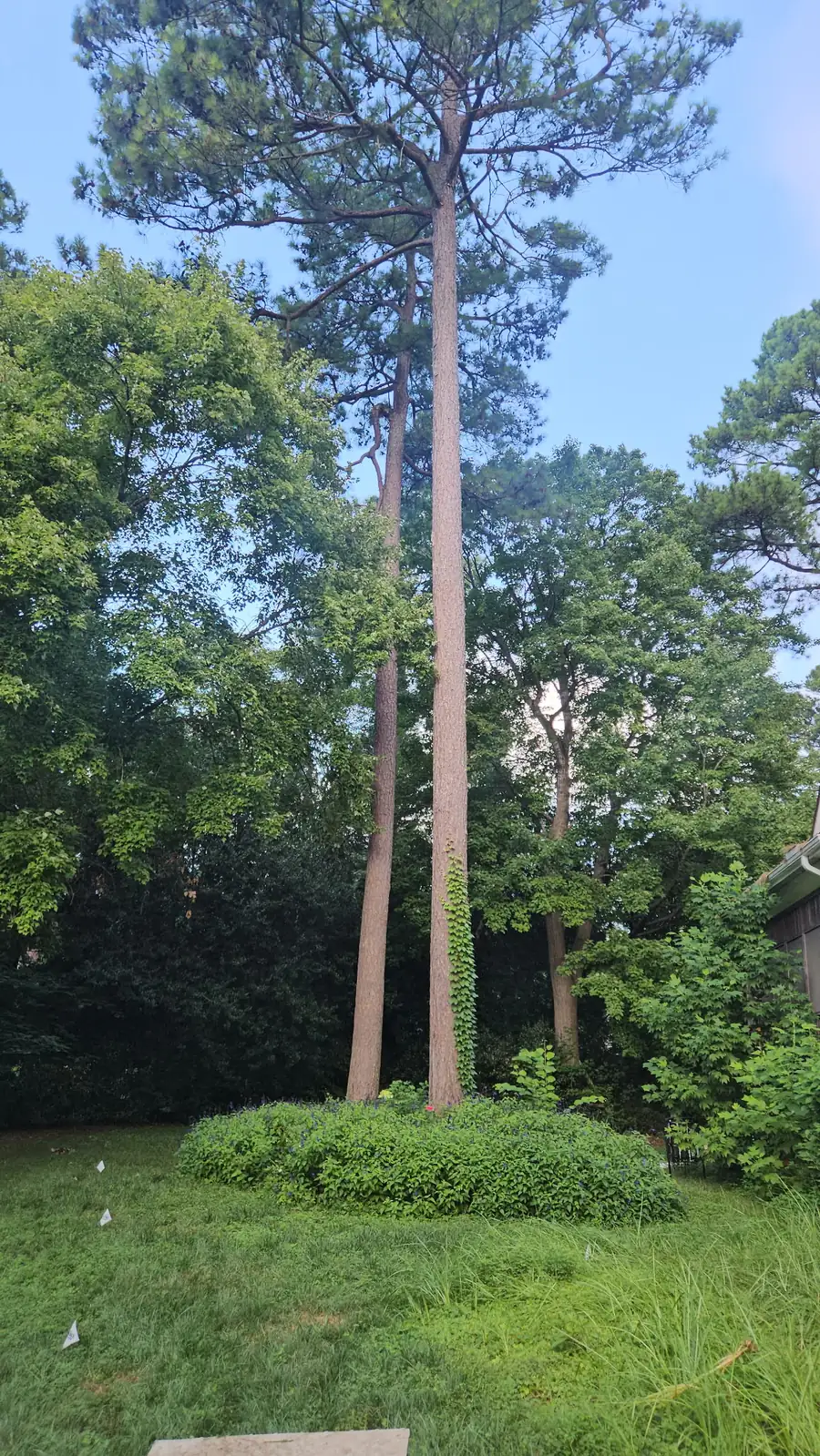
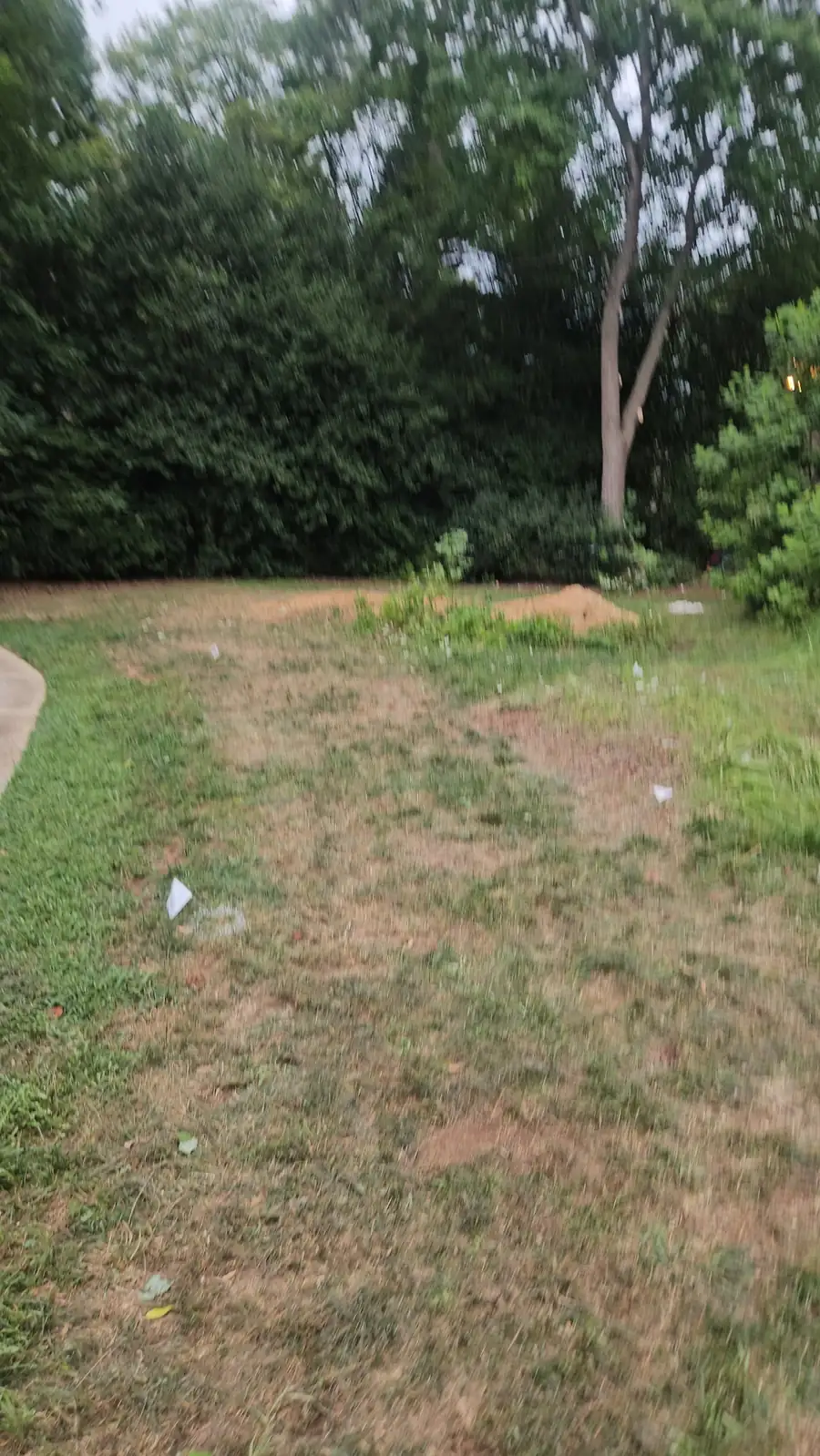
Two tall pines were removed from a residential lot in the MacGregor Downs neighborhood of Cary.
Cleanup is part of the job, and we agree on the details during the estimate: haul-away of wood and brush, whether you want any firewood left behind, raking and blowing of the work area, and whether stump grinding is included.
Often not on a typical residential lot, but rules vary by town and by situation. Some municipalities regulate tree removal in required buffers, on development sites or on certain types of property, and many HOAs have their own approval process. Check with your town and HOA before work begins; we are happy to talk through what we see on site.
Every removal is priced individually. The biggest factors are the height and trunk diameter of the tree, its condition, how close it is to the house or other structures, how easy it is to reach with equipment, and how much cleanup and stump grinding you want. A free on-site estimate gives you a firm number.
Yes. Trees near homes are usually taken down in sections, with pieces lowered by rope rather than dropped, so they never land on the roof, gutters or deck. The approach depends on the tree and the space around it, which we evaluate during the estimate.
It can be. Some customers want the stump ground right away and others prefer to leave it. Let us know during the estimate and we will include it in the price if you want it done.
Yes. e Tree Service is fully insured. You are welcome to ask for proof of coverage before work begins, and property managers can request it for their records.
Every job starts with a walk of the site to identify hazards and plan how each part of the tree will come down. Crews wear helmets, high-visibility clothing and task-appropriate protective gear, keep a clear work zone, and lower wood on ropes near homes, fences and other trees. We are also fully insured.
Tell us what is going on with your trees and we will follow up to schedule a look. If a tree is already down or threatening your home, call (919) 290-3020 any time, day or night.